eCommerce analytics & growth enablement

Turn customer data into measurable business growth.
Share Your Concept
  • 80+
    In-house
    Experts
  • 5+
    Team’s Average
    Years of Experience
  • 93%
    Employee
    Retention Rate
  • 100%
    Project Completion
    Ratio
From raw data to real ROI

Analytics that guide every decision

Data-driven insights

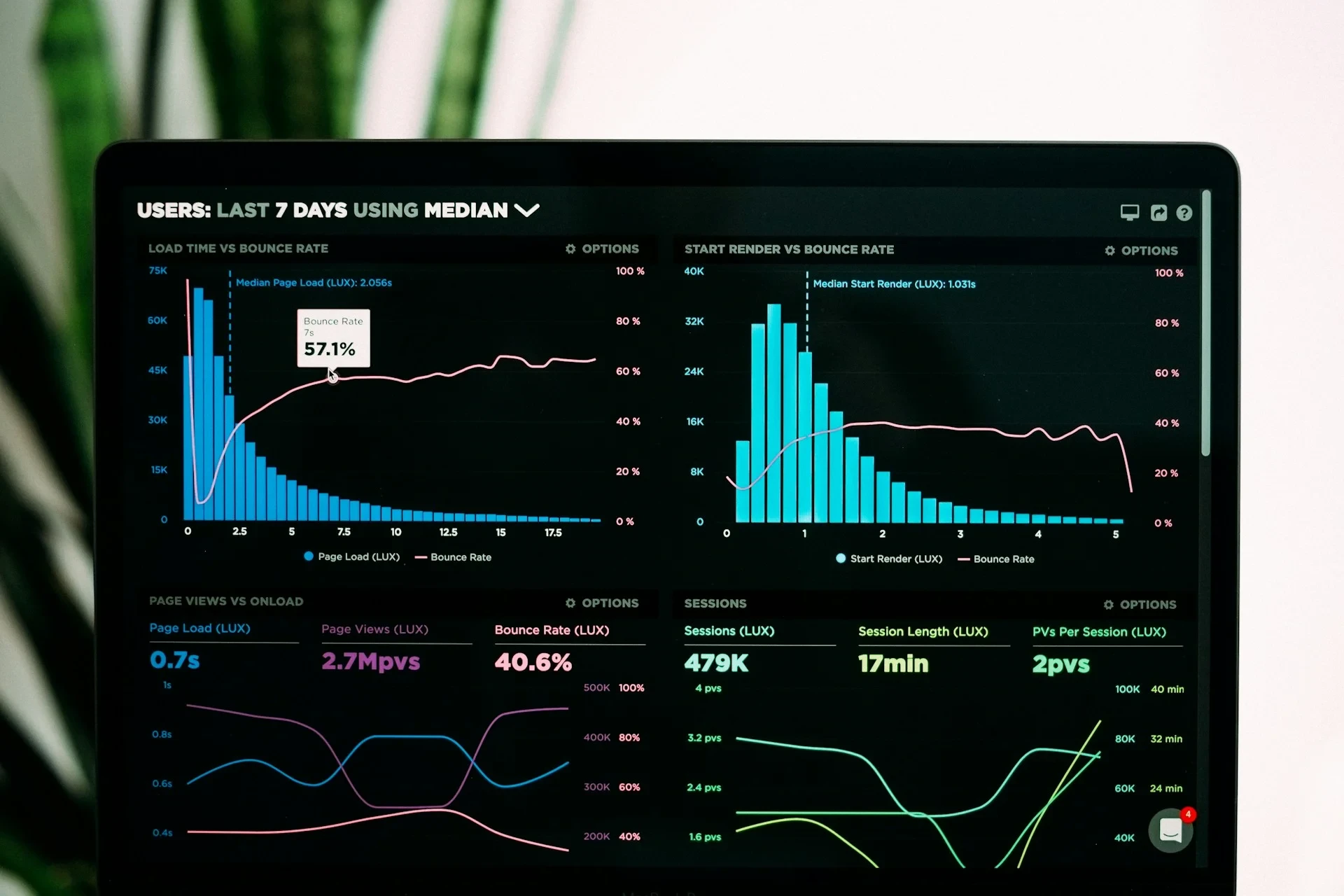
We set up dashboards to track customer journeys, sales funnels, and drop-offs.

Conversion optimization

Continuous A/B testing helps identify the best designs, CTAs, and flows.

Marketing automation

Automate abandoned cart recovery, push notifications, and personalized offers.

Predictive analytics

Anticipate buying patterns to guide future campaigns and inventory planning.

Analytics that speak clearly

Tools that visualize growth opportunities

  • Interactive Data Tools

    Smart insights and visualization that bring data to life.

    google_analytics-ar21

    Google Analytics

    mixpanel

    Mixpanel

    amplitude-ar21

    Amplitude

  • Automation tools

    Streamline tasks, save time, boost efficiency.

    hubspot-ar21

    HubSpot

    Klaviyo New 2022

    Klaviyo

    Moengage

    MoEngage

  • Testing

    Smarter testing, stronger software.

    Optimizely

    Optimizely

    VWO

    VWO

Tech talk

Developer tips & insights

Growth questions answered

Cutting through complexity with clarity

We implement advanced analytics and automation tools that reveal exactly how customers interact with your store. From conversion funnels to personalized campaigns, our solutions help you grow smarter, not just bigger.

Most important funnel metrics are: product page view → add‑to‑cart rate, cart → checkout start, checkout completion rate, average order value, and revenue per visitor. Track them by channel and device so you can prioritize fixes where drop‑offs hurt revenue most, not just traffic or clicks.​
For D2C, a pragmatic CLTV is: CLTV ≈ average order value × purchase frequency × average customer lifespan − acquisition/servicing costs. Use it to set CAC caps, choose which cohorts to scale (high CLTV channels, products, or geos), and design loyalty/subscription offers that improve payback periods.​
Set up A/B tests via a feature‑flag/experimentation tool that randomizes users into variants at the edge, logs events consistently, and only changes one major element at a time (headline, image, price display, checkout layout). Define success metrics upfront (conversion rate, AOV, abandonment), run tests to statistical significance, and avoid mid‑test tweaks that break UX or data quality.​
Use behavioral events (product views, adds, time on page, exits) to trigger flows in your marketing automation/CDP: cart abandonment journeys (email/SMS/push with cart contents), browse‑abandon reminders, and post‑purchase upsells based on items bought. Segment by value and intent so high‑value or high‑margin shoppers get more personalized sequences and recommendations.​
Common mistakes include obsessing over vanity metrics (raw traffic, followers) instead of conversion and profit, misconfigured tracking (broken dataLayer, wrong event scopes), and comparing apples to oranges across channels or industries. Others are running tests on tiny samples, ignoring cohort and margin context, and making big strategy calls from noisy or incomplete data.​

Move beyond reports. Find the next best move

Turn abandoned carts, behavioral journeys, and purchases into clear signals, recommend the right offers, launches, and support for higher conversions and CLTV.